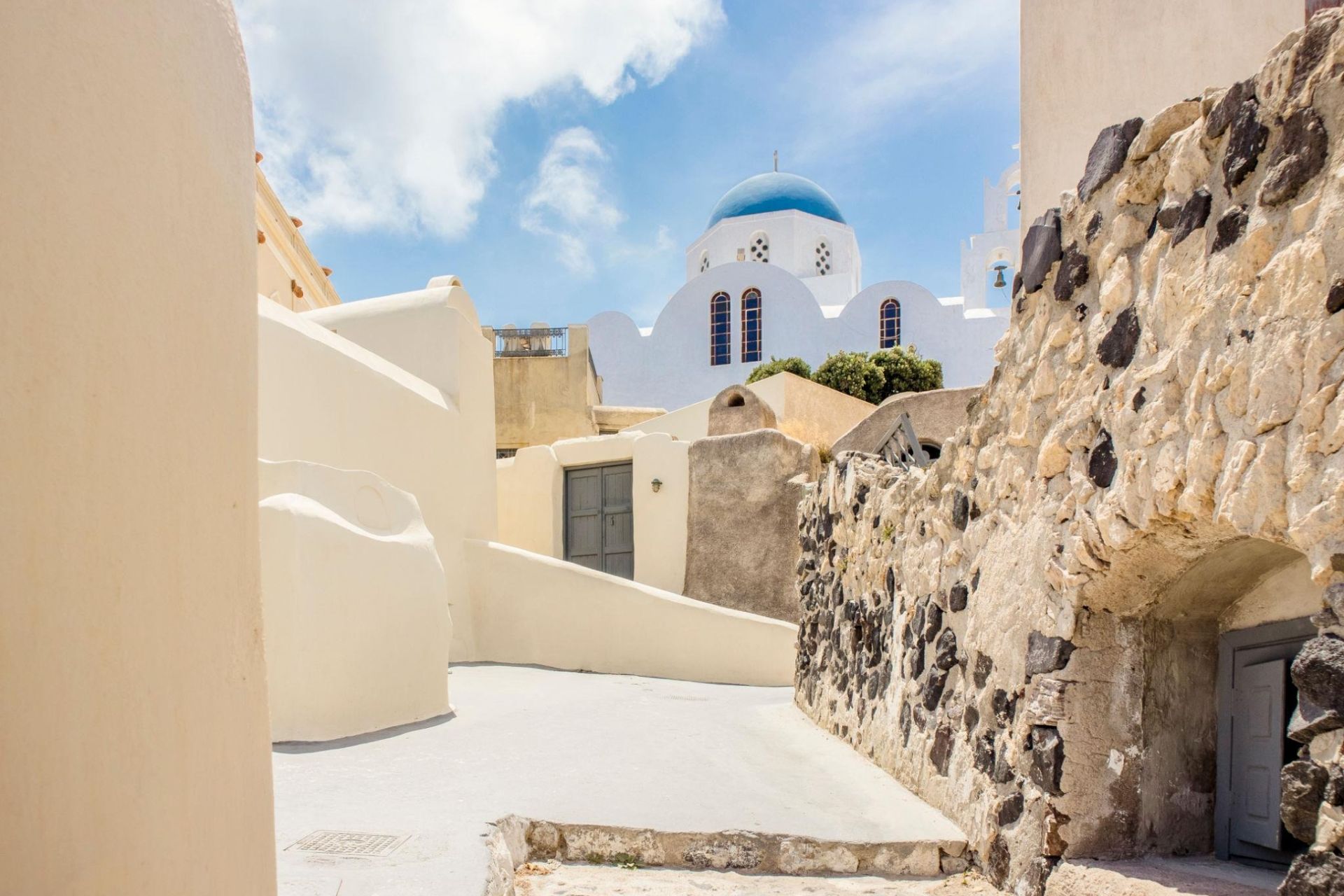
While villages like Oia and Fira often dominate Santorini travel guides, the island’s true cultural depth lives in its quieter inland settlements. Pyrgos, Emporio, and Megalochori reveal a different Santorini — one shaped by Venetian rule, pirate invasions, agriculture, and everyday local life.
These villages are not just beautiful stops. They are living historical archives where architecture, traditions, and community life have remained remarkably intact.
Pyrgos – Santorini’s Former Capital and Panoramic Guardian
A Village Built to See Everything
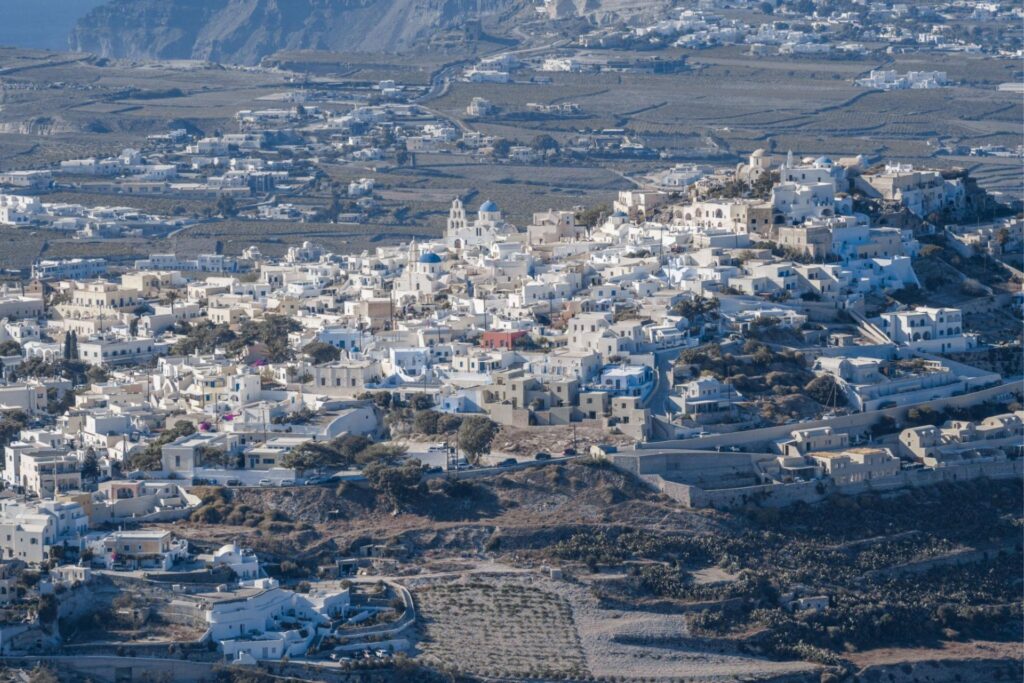
Pyrgos sits on the highest hill in Santorini, which is not accidental. For centuries, elevation meant protection. Pyrgos was strategically designed to offer full visual control of the island and surrounding sea, making it one of Santorini’s safest settlements during periods of pirate raids.
Before Fira became the administrative center, Pyrgos served as the island’s capital. Walking through Pyrgos today feels like stepping into Santorini’s political and social past.
The Fortress Village Design Most Visitors Miss
Pyrgos was constructed as a kasteli village, meaning it developed around a fortified castle complex built during Venetian occupation (13th–16th century). Houses were built extremely close together to form a protective wall.
Hard-to-Find Detail:
Many buildings in Pyrgos share walls and roofs intentionally. This created natural defensive barriers and helped villagers move between homes without entering streets during attacks.
Religious Importance You Rarely Hear About
Pyrgos has more than 30 churches and chapels — an unusually high number for its size. Many were built by local families as expressions of faith and social status.
One of the most important is The Monastery of Prophet Elias, located just above Pyrgos. It is the highest point on Santorini and historically functioned as:
- A spiritual center
- A hidden school during Ottoman rule
- A storage site for local cultural archives
Secret Experience Most Tourists Miss
At sunset, most visitors head to Oia. Locals often go to Pyrgos instead. From here, you can see nearly the entire island, including vineyards, villages, and both sides of Santorini’s coastline.
It is one of the few places where you understand the island’s geography in one single view.
Emporio – Santorini’s Medieval Labyrinth and Pirate Shield
The Largest Traditional Village in Santorini
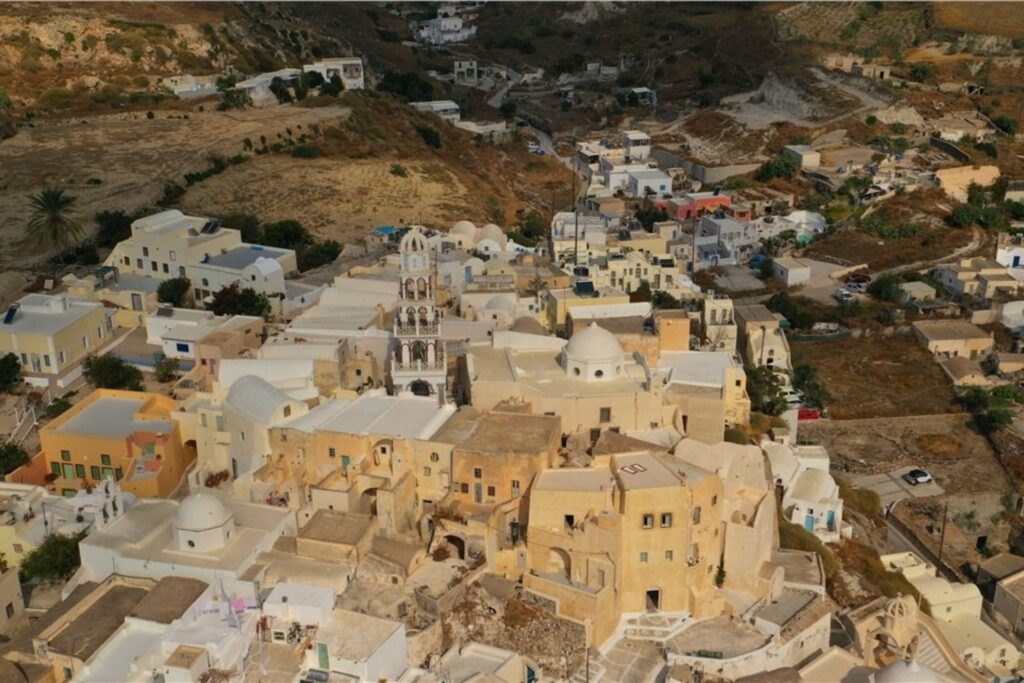
Emporio is one of Santorini’s oldest and largest settlements. It served as the island’s main agricultural and trade center for centuries, especially during the period when Santorini exported wine and volcanic products across the Mediterranean.
Unlike cliff villages shaped by tourism, Emporio grew organically as a working community.
A Medieval Defense System Hidden in Plain Sight
Emporio is famous for its kasteli fortress, built during Venetian rule. The village’s maze-like layout was not decorative — it was military strategy.
Hard-to-Find Detail:
The narrow alleyways were intentionally designed to confuse invading pirates. Many passages lead to dead ends or sudden staircases that locals could navigate easily but outsiders could not.
The village also includes defensive towers known as Goulas towers, which functioned as watchpoints and last-resort refuges during attacks.
The Social Structure Hidden Inside Architecture
Emporio was historically divided into social zones:
- Inner fortress for protection during attacks
- Outer residential areas for daily life
- Agricultural fields surrounding the settlement
This layered village design reveals how communities balanced safety with economic survival.
Cultural Secrets Most Travelers Overlook
Emporio preserves some of Santorini’s most authentic daily traditions:
- Seasonal festivals still organized by local families
- Small artisan workshops hidden inside alleyways
- Local bakeries using centuries-old recipes
Walking Emporio feels less like sightseeing and more like observing a living historical neighborhood.

Megalochori – Santorini’s Aristocratic Wine Village
A Village Built on Wealth and Trade
Megalochori developed differently from Pyrgos and Emporio. It became one of Santorini’s wealthiest villages during the 17th and 18th centuries due to maritime trade and wine exports.
Many Megalochori families owned ships that transported Santorini wine across Europe and Russia.
Hidden Architecture That Reveals Its Wealth
Megalochori is known for grand captain houses and underground wine storage caves called canavas.
Hard-to-Find Detail:
Many of these underground wine caves were designed not only for temperature control but also as protection from earthquakes and pirate raids.
Some of today’s wineries still operate inside these original cave structures.
The Bell Towers That Became Santorini Icons
Megalochori’s elegant bell towers are some of the most photographed in Santorini. These towers symbolized wealth and community pride, as churches were often funded by prosperous shipping families.
A Village That Preserves Santorini’s Agricultural Identity
Unlike tourist-heavy areas, Megalochori still reflects Santorini’s agricultural roots. Surrounding vineyards grow grapes using the famous kouloura basket vine technique, protecting grapes from strong winds and intense sun.
Quiet Luxury Travelers Secretly Seek
Megalochori offers something rare in Santorini: refined calm. It combines elegant architecture, wine culture, and authentic village life without heavy crowds.
It is often chosen by travelers looking for a romantic but culturally meaningful Santorini experience.
The Shared History Connecting All Three Villages
Despite their differences, Pyrgos, Emporio, and Megalochori share several important historical elements:
Venetian Influence
All three villages were shaped during Venetian occupation, which introduced fortress architecture and centralized defensive planning.
Pirate Threats
Santorini suffered frequent pirate attacks between the 15th and 18th centuries. Village layouts, narrow alleys, and fortified centers were direct responses to this threat.
Agricultural Economy
Before tourism, Santorini relied heavily on wine production, farming, and maritime trade. These villages served as production and distribution hubs.
Hard-to-Find Cultural Details That Reveal Authentic Santorini
Villages Were Built Inward, Not Outward
Unlike modern towns designed for views, traditional villages focused on protection and survival.
Churches Reflected Family Status
Owning a private chapel was historically a symbol of prosperity.
Underground Architecture Was Essential
Cave homes were naturally insulated, earthquake-resistant, and energy efficient centuries before modern sustainability concepts.
Why Visiting These Villages Changes How You See Santorini
Oia and Fira show Santorini’s beauty.
Pyrgos, Emporio, and Megalochori show Santorini’s identity.
They reveal:
- How locals lived before tourism
- How architecture adapted to danger and climate
- How trade and agriculture shaped culture
Insider Visiting Tips
✔ Visit early morning or late afternoon for authentic atmosphere
✔ Wander without maps — villages were designed for exploration
✔ Look for small chapels hidden inside alleyways
✔ Speak with local winery owners — many are multi-generation families
Santorini’s Real Story Lives in Its Villages
If Santorini were only sunsets and caldera views, it would still be beautiful. But villages like Pyrgos, Emporio, and Megalochori reveal something deeper — resilience, tradition, and community memory carved into architecture and landscape.
They remind travelers that Santorini is not just a destination. It is a living history shaped by survival, trade, and cultural pride.

About The Author
alia